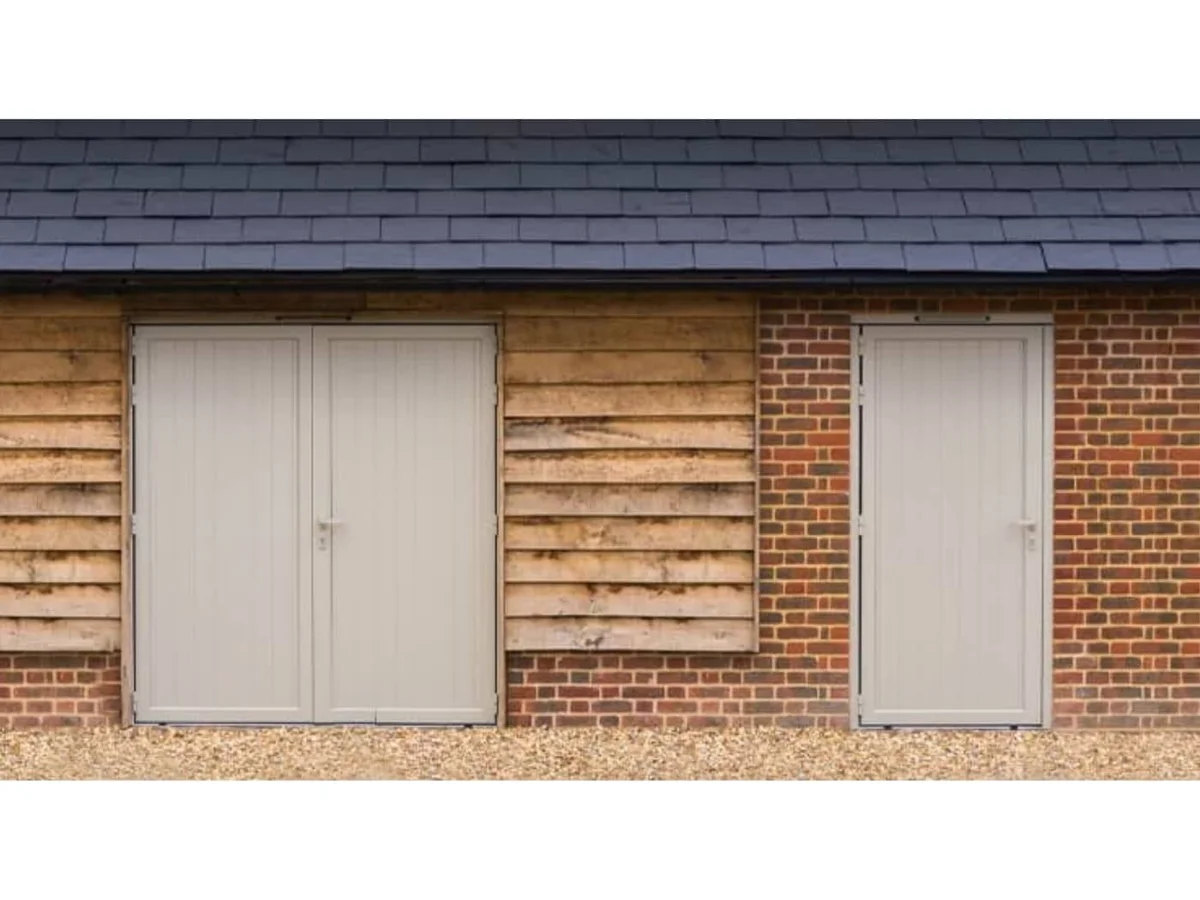
Space and clearance
The leaves normally open outwards, so the driveway must provide enough clear space. Check a rising drive, parked cars, paths and any boundary or pavement before choosing.

Open one leaf for a bicycle, tools or a trip to the freezer. Side-hinged garage doors bring a familiar, practical entrance to garages that do more than store a car.
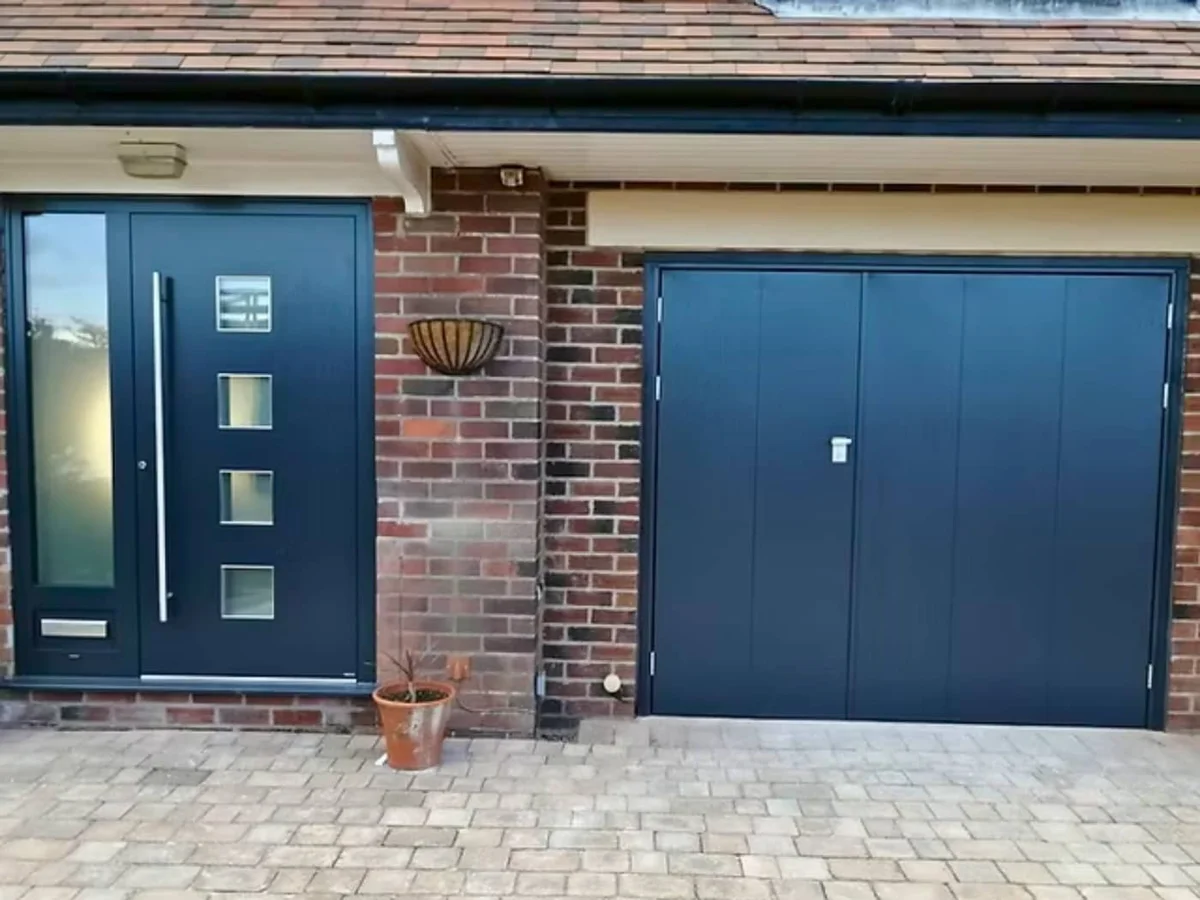
Especially useful when the garage is a workshop, store or utility space and you regularly enter on foot. Leaf proportions and the leading leaf can be chosen to suit your routine, where available.
The leaves normally open outwards, so the driveway must provide enough clear space. Check a rising drive, parked cars, paths and any boundary or pavement before choosing.
Insulated versions, glazing, thresholds and seals vary by range. Think about daylight, privacy, ventilation and security together, particularly when you store valuable tools or use the space often.
Open leaves can catch the wind and need suitable stays or restraints. You cannot park immediately against an outward-opening door and still expect it to open.
Send the opening width and height, plus a photo showing the approach and any nearby walls.
Use the gallery to narrow down the appearance you like. We confirm the available finishes on the range that suits your opening.
| Door type | Where it opens | Often a good fit for | Check before choosing |
|---|---|---|---|
| Sectional garage doors ↗ | Up, then beneath the ceiling | Close driveway parking; a substantial appearance | Headroom, side room and backroom |
| Roller garage doors ↗ | Coils above the opening | Keeping most ceiling space clear | Roll/hood space and clear opening height |
| Side-hinged garage doors ↗ | Leaves swing outwards | Frequent access on foot | Driveway clearance and wind restraint |
| Up-and-over garage doors ↗ | One panel lifts up and over | A familiar replacement arrangement | Outward travel and canopy/retractable choice |
Send a few details and, if you have them, photos of your opening. We’ll help you work out the next step.
Automation depends on the specific door and mechanism. Your quotation should identify the motor, controls, safety equipment and any electrical work. We confirm compatibility rather than assume all doors accept the same operator.
An automated door needs an appropriate manual-release arrangement. If the garage has no separate entrance, discuss an external emergency release before ordering. Ask for a demonstration at handover and keep the instructions accessible.
Approximate measurements can support an initial estimate. Final manufacturing dimensions must account for the mounting position, frame, mechanism and tolerances. For a fitted order, these are confirmed through the survey. For supply only, agree measurement responsibility with your installer.
Opening size, door range, insulation, finish, glazing, automation, removal, access and making good can all affect the price. Compare written quotations with the same scope and check VAT, electrical work and optional accessories.
No. Walls, roof, floor, air leakage and ventilation also matter. If you plan a garage conversion, get project-specific advice about the building work and permissions before treating a replacement garage door as the whole solution.
Follow the manufacturer’s cleaning and service instructions, keep moving parts clear and arrange checks where required. Do not adjust springs, cables or other loaded components yourself. Keep service records and your warranty documents.